Stay Connected Anywhere: Get Your International eSIM Right Now
An international eSIM is a digital SIM card embedded in your phone that lets you connect to cellular networks abroad without needing a physical plastic card. Instead of hunting for a local SIM at an airport kiosk, you simply scan a QR code or use an app to install a data plan that works across multiple countries. This means you can stay connected the moment you land, avoiding roaming fees and the hassle of swapping SIMs, while keeping your home number active for calls and texts. All you need is a compatible, unlocked device and a plan that matches your travel destinations.
What Exactly Is an International eSIM and How Does It Work?
An international eSIM is a digital SIM profile that you install on your phone, giving you instant access to cellular networks across multiple countries without buying a physical SIM card. Instead of swapping cards, you scan a QR code or download a data package from a provider. The eSIM stores your subscription details securely in your device’s chip. When you land abroad, the eSIM automatically connects to a local partner network—no need to hunt for a Wi-Fi hotspot or purchase a regional SIM. You manage everything through an app or your phone’s settings, topping up data as you go. The core of its magic is a “local profile” that switches networks dynamically, based on your location and signal strength, so you roam seamlessly. It’s essentially a universal, software-based key to global connectivity, activated in minutes.
The Core Technology Behind a Digital SIM Card
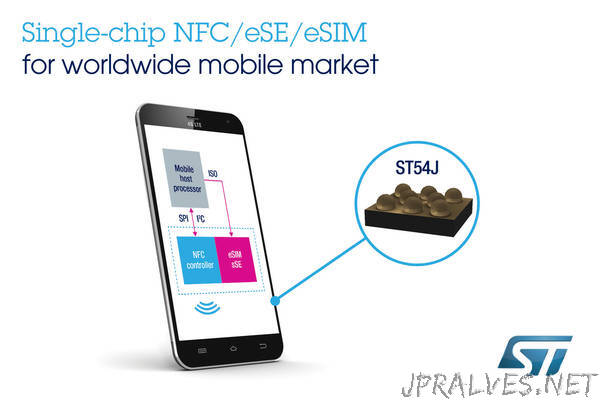
At its core, a digital SIM replaces the physical plastic chip with a tiny, rewritable secure element—either soldered into your device New Zealand eSIM or stored in its dedicated hardware. This element holds your profile, encrypted with the same authentication algorithms as a physical card, but allows you to download and switch carriers over the air via a QR code or app. The magic lies in the remote SIM provisioning architecture, which lets your phone securely pull down new operator credentials. Because the profile isn’t tied to a specific socket, the same chip can hold multiple identities simultaneously, yet only one is active at a time. Your device talks to the network using standard cryptographic keys, ensuring a connection identical to a physical SIM—just without the swap.
In short, the core technology converts a physical identity module into a software-driven, remotely managed secure chip.
How Data Roaming Gets Replaced by a Local Virtual Profile
When you activate an international eSIM, your phone discards the traditional roaming path by downloading a local virtual profile that operates on a partner network in your destination. Instead of your home carrier negotiating rates with a foreign operator—which triggers daily fees—the eSIM profile establishes a direct, pre-negotiated connection with a local tower. The process unfolds in a clear sequence:
- You scan a QR code or install an app to fetch the profile.
- The profile embeds a new IMSI and authentication key, effectively cloning a local subscriber identity.
- Your device registers on the local network as if it were a native phone.
- Data flows through that local packet core, bypassing your home carrier’s switching center entirely.
This means your IP address and routing now originate from the local country, so latency drops and speeds match local plans. The virtual profile replaces the roaming agreement’s relay, eliminating per-MB surcharges while keeping your primary SIM idle.
Why Travelers Are Switching to a Virtual SIM Instead of Physical Cards
Travelers switch to an international eSIM because it removes the need to hunt for a physical SIM shop upon arrival. Instead of juggling tiny cards or risking damage to the slot, they scan a QR code before departure and connect as soon as the plane lands. A virtual SIM also allows instant carrier switching from a phone’s settings, something a physical card cannot do without a new purchase. This makes it ideal for multi-country trips—users top up or change plans remotely without swapping hardware. The core benefit is convenience: no lost cards, no queuing, and no needing a paperclip to eject the tray. Q: Why not just buy a local card? A: Because an eSIM activates instantly and keeps your WhatsApp number active on the same device.
The Biggest Practical Advantages of Going Digital for Global Data
The biggest practical advantage of going digital for global data is instant, seamless connectivity the moment you land—no hunting for local SIM kiosks or wrestling with tiny card trays. With an international eSIM, you can pre-download a data plan before departure, meaning your phone works immediately upon arrival, saving precious travel time. You also avoid physical card loss or damage, as your profile is safely stored on the device. Switching between countries is effortless, with a few taps to download new plans rather than swapping plastic. This digital approach ensures you’re always online for maps, translation, and ride-hailing without interruption.
What is the biggest practical advantage of going digital for global data? The absolute elimination of physical logistics—no queuing in stores, no SIM ejector tools, and no risk of dropping a tiny card in a foreign airport. This streamlined, always-ready system transforms travel from stressful to smooth.
What You Gain in Terms of Cost, Convenience, and Coverage

Switching to an international eSIM delivers immediate financial control, as you bypass physical-card retail markups and compare data packages across providers without replacing hardware. Convenience compounds this: you activate coverage before departure, eliminate SIM-tray fumbling, and hot-swap local plans mid-trip from a single app, preserving your primary number for calls. Coverage gains align with pay-as-you-go regional flexibility, letting you layer a local data plan onto your existing eSIM profile—crucial for multi-country itineraries where shared regional networks outperform single-nation cards. Roaming surprises vanish because usage is tracked live, and top-ups occur instantly via WiFi, not storefronts. The logistical overhead drops to near zero, while cost stays predictable per gigabyte.
Cost transparency, app-based setup, and regional scalability are your concrete gains when replacing fragile plastic cards with a virtual SIM.
How to Choose the Best Global Data Plan for Your Trip
When choosing the best global data plan for your trip, start by verifying that your smartphone is eSIM-unlocked, as this determines your provider options. Compare **international eSIM plans** based on your destination list—some regional packages cover multiple countries more cheaply than global ones. Assess your data consumption honestly; streaming and maps drain gigabytes fast, so pick a plan with a buffer rather than a bare minimum. Check coverage maps on the provider’s site, prioritizing networks that partner with local carriers for stronger rural signal. Crucially, review the activation process: instant QR delivery is essential for last-minute travel, while some plans require in-app setup hours before departure. Finally, compare per-gigabyte costs across at least three providers, noting validity windows (7 vs 30 days) to avoid paying for unused days. These checks ensure your **global travel data plan** matches your route, device, and usage without surprises.
Key Factors to Compare: Coverage Zones, Data Allowances, and Validity
When comparing international eSIM plans, prioritize coverage zones, data allowances, and validity as a single decision matrix. Coverage zones dictate which countries or regions your plan activates in—a regional plan may fail entirely if your itinerary includes a non-listed nation. Data allowances require matching your consumption habits; a 1GB daily cap suffices for navigation, but streaming or cloud backups demand 5GB or more. Validity, meanwhile, defines the activation window—some plans expire 30 days after purchase, not activation, which wastes money on pre-trip purchases. Always cross-check validity against your exact travel dates, especially for multi-month trips. The trade-off: broader zones and larger data pools raise cost, but shorter validity often lowers per-GB pricing. Choose the combination where your usage overlaps all three factors without surplus.
Regional vs. Worldwide Plans—Which One Fits Your Itinerary?
Choosing between regional and worldwide eSIM plans hinges on your specific route. A regional plan, covering clusters like Europe or Southeast Asia, offers better value if your itinerary stays within one zone, since you pay only for the networks you’ll actually use. Conversely, a worldwide plan makes sense for multi-continent trips, eliminating the hassle of swapping eSIMs at each border. Analyze your stops: if you island-hop across one region, regional wins on cost; if you bounce between Japan, the US, and France, worldwide saves time. The key is matching coverage to your exact flight path, not your worst-case scenario.
Q: Which one fits your itinerary best for a two-week trip across three neighboring countries?
A: A regional plan—it covers all three at a lower rate than worldwide, provided they share a regional zone.
Step-by-Step Guide to Setting Up a Digital Roaming Profile on Your Phone
To set up a digital roaming profile with an international eSIM, first confirm your phone is carrier-unlocked and eSIM-compatible, then purchase a data plan from a reputable provider. Next, scan the QR code emailed to you, or manually enter the activation code under *Settings > Cellular > Add eSIM*. After installation, label the profile (e.g., “Travel Data”) and set it as the default for **cellular data**, while keeping your primary line active for calls and SMS. Crucially, enable **data roaming** for the eSIM line only, and disable automatic network selection to manually pick a strong local carrier upon arrival. Your phone’s battery may drain faster when scanning for networks, so downloading an offline map is a wise backup. Finally, test the connection by toggling airplane mode on and off before departure to ensure the profile activates seamlessly.
Checking Device Compatibility Before You Buy

Before purchasing an international eSIM, checking device compatibility before you buy prevents wasted money and setup frustration. First, confirm your smartphone is carrier-unlocked, as locked devices often reject foreign eSIM profiles. Second, verify eSIM support by dialing `*#06#`—if an EID number appears, your hardware includes the necessary chip. Third, check your phone’s official specifications on the manufacturer’s site, since older models like the iPhone X lack eSIM functionality. Finally, review the eSIM provider’s device list, which typically covers recent Pixel, Galaxy, and iPhone series. After purchase, follow activation steps only if your model appears on that list; otherwise, a physical SIM remains your fallback.
Installing and Activating the eSIM Profile in Minutes
After purchasing your international eSIM plan, you’ll receive a QR code or a manual activation code. Open your phone’s settings, navigate to the cellular or mobile data section, and select “Add eSIM.” Scanning the QR code triggers an immediate download; alternatively, you can enter the SM-DP+ address and activation code manually. The profile installs in under a minute, requiring only a stable Wi-Fi or data connection. Once installed, assign the eSIM to your data line and enable data roaming for that specific profile. Your device will then connect to the local network automatically, completing the instant eSIM activation process without restarting the phone.
- Ensure your phone is unlocked and supports eSIM technology before scanning.
- Use a QR code sent via email or the provider’s app for the fastest installation.
- Verify that the eSIM line is set as the default for cellular data after activation.
- Keep the activation code saved as a backup in case you need to reinstall the profile.

Tips to Get the Most Out of Your Travel Data Package
Activate your international eSIM only after landing to preserve your prepaid days, and disable auto-updates for apps, cloud backups, and email push before departure. Stream music and maps offline whenever possible, since video and social feeds drain allowances fastest. Prioritize Wi-Fi for heavy tasks like OS updates or video calls, saving your data for navigation and messaging. If your plan offers a daily cap, monitor usage through your carrier’s app—burning a full day’s allowance on a 10-minute FaceTime is a common mistake. Q: How do you avoid accidental roaming charges? A: Set your phone to “eSIM only” mode and turn off the physical SIM’s roaming toggle. Finally, download offline Google Maps for your entire route and pre-load any booking PDFs or tickets into your wallet, so you never need to fetch them over cellular.
How to Monitor Usage and Avoid Running Out of High-Speed Data
To avoid throttling, check your eSIM provider’s app or dashboard daily—most offer real-time counters for your high-speed data balance. Set a manual alert at 50% and 20% remaining; your phone’s built-in data tracker (iOS or Android) can also log usage, but reset it at departure to match your plan’s cycle. Disable background refresh for maps, email, and social apps before they eat your allowance, and switch to Wi-Fi for heavy downloads or video calls. If you dip low, toggle on data saver mode or drop to 3G/LTE only—streams still work but at reduced quality, preserving your quota for navigation and messaging.
Track daily via the provider app, set two alerts, restrict background data, and use Wi-Fi for heavy tasks—this keeps high-speed data alive for what matters.
Managing Multiple Profiles and Switching Between Home and Travel Numbers
To manage multiple profiles effectively, keep your primary home eSIM active but disabled for data, while enabling your travel eSIM only when needed. This prevents accidental roaming charges and preserves battery life. For seamless switching between home and travel numbers, configure your device’s dual-SIM settings to assign voice calls and SMS to your home profile, while routing data exclusively through the destination eSIM. Many phones allow one-tap toggles in the control panel, so you can flip data lines mid-trip without removing physical SIMs. Always label each profile clearly (e.g., “Home US,” “Japan Data”) to avoid confusion when toggling. Test both numbers before departure to confirm call forwarding and iMessage/FaceTime registration.
- Use the “SIM manager” to set default lines for calls, messages, and data separately.
- Disable automatic network selection on the travel profile to avoid cross-border roaming fees.
- Keep the home eSIM enabled but in “no data” mode to receive verification codes and OTPs.
Common Questions Travelers Have About Global Virtual SIMs
Travelers often ask if a global virtual SIM will work the moment they land, and the answer is yes—provided your international eSIM profile is activated before departure. Another frequent concern is whether switching to an eSIM kills your home number; it doesn’t, as dual-SIM lets you keep WhatsApp and banking alerts on your primary line while using the eSIM for data. People also wonder about coverage gaps—most global eSIMs route through multiple local networks, so you’re not stuck on one spotty carrier. Battery drain is a common worry, but modern eSIMs use negligible power. Finally, travelers ask if they can top up mid-trip; most providers let you add data packs instantly via app, avoiding roaming sticker shock.
The key insight: your eSIM’s data speed depends on the weakest local tower, not the SIM itself—so check coverage maps for rural areas.
Will My Phone Still Receive Calls and Texts on My Home Number?
Yes, your phone can still receive calls and texts on your home number while using an international eSIM, but it depends on how you configure your device. When you activate a data-only eSIM, your physical SIM’s cellular line remains active for voice and SMS, provided you do not disable it or switch it off in settings. However, if your home carrier lacks Wi-Fi calling support, incoming calls may route to voicemail because the phone cannot simultaneously hold an active home-network signal and a foreign data connection. For seamless delivery, enable **Wi-Fi calling on your home number** and keep the physical SIM line active while the eSIM handles data. Your home number’s call and text reception depends on your carrier’s roaming or Wi-Fi calling capabilities.
Will my phone still receive calls and texts on my home number with an eSIM active? Yes, as long as the home SIM line is enabled and you have either Wi-Fi calling turned on or your carrier supports international roaming for voice and SMS, which may incur fees.
What Happens If I Need More Data Mid-Trip or Encounter Connection Issues?
Running low on data mid-trip is easy to fix—most eSIM apps let you buy a **quick top-up data plan** in just a few taps, and it activates instantly without swapping cards. For connection issues, first toggle airplane mode on and off; if that fails, manually select a different network in your phone’s settings. Most eSIMs auto-connect to local towers, but sometimes a manual pick solves it.
Q: What happens if I need more data or hit connection problems?
A: You simply recharge via the app, and for weak signals, restart your device or force a network rescan—both take under a minute.
